
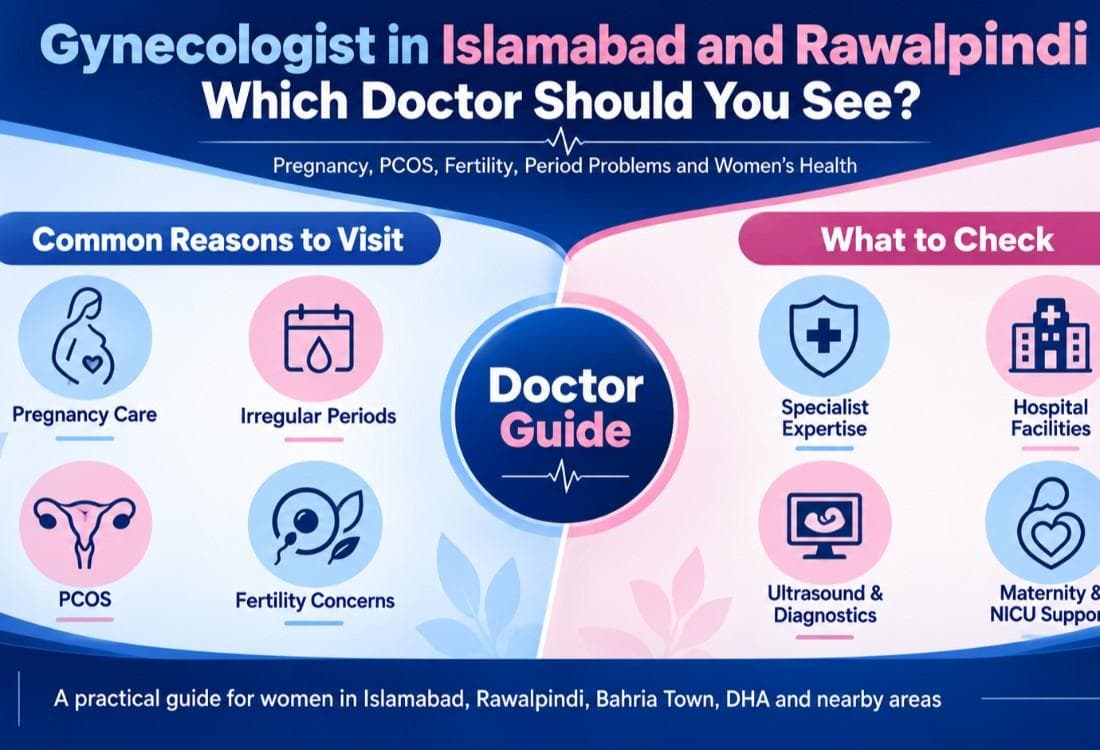
Gynecologist in Islamabad and Rawalpindi: Which Doctor Should You See?
If you search for a gynecologist in Islamabad, female gynecologist in Rawalpindi, pregnancy doctor near me, or best gynae doctor in Bahria Town, you will find long lists of doctors.
The harder question is deciding which gynecologist is suitable for the problem you actually have.
A woman with irregular periods may need assessment for PCOS, thyroid problems, fibroids or another hormonal condition. Someone planning a pregnancy may need an obstetrician for pre-pregnancy advice and antenatal care. A couple having difficulty conceiving may need a fertility assessment. Persistent pelvic pain, ovarian cysts, abnormal bleeding or endometriosis may require a different type of investigation.
This guide explains what a gynecologist treats, when to book an appointment and which Gynaecology and Obstetrics doctors currently practise at Reliance Hospital for patients coming from Islamabad, Rawalpindi, Bahria Town, DHA, PWD and nearby areas.
What Does a Gynecologist Treat?
A gynecologist, also commonly called a gynae doctor in Pakistan, deals with conditions affecting the female reproductive system.
Women commonly visit a gynecologist for:
irregular or missed periods
heavy menstrual bleeding
painful periods
PCOS
hormonal problems
ovarian cysts
uterine fibroids
pelvic pain
vaginal discharge or infections
endometriosis
difficulty becoming pregnant
pregnancy planning
antenatal care
high-risk pregnancy
menopause symptoms
family planning
contraception
abnormal vaginal bleeding
cervical screening
An obstetrician focuses particularly on pregnancy, labour and childbirth. Many consultants practise both gynaecology and obstetrics, which means they manage women's health conditions as well as pregnancy and delivery.
Patients who want to understand the full range of available women's health care can also review the Gynaecology Department at Reliance Hospital.
Which Gynecologists Currently Practise at Reliance Hospital?
Reliance Hospital's current Gynaecology and Obstetrics team includes three female doctors.
Dr. Hira Tanveer
Dr. Hira Tanveer is a Consultant Gynaecologist and Obstetrician with MBBS and FCPS qualifications.
Her current hospital profile lists more than 15 years of reported experience and includes:
pregnancy and antenatal care
obstetrics
normal and Caesarean delivery
menstrual problems
infertility assessment
IUI-related fertility care
gynaecological surgery
uro-gynaecology
Women searching for a pregnancy doctor in Bahria Town, gynecologist for menstrual problems, obstetrician or fertility assessment can review her full profile and current clinic timing before booking.
Dr. Rozina Khattak
Dr. Rozina Khattak practises Gynaecology and Obstetrics at Reliance Hospital.
Her current profile includes routine women's health concerns, menstrual-cycle changes, pregnancy-related consultations and pregnancy follow-up.
Women looking for a female gynecologist in Rawalpindi for general gynae concerns or pregnancy follow-up can review her current consultation schedule on her doctor page.
Dr. Iffat Seema
Dr. Iffat Seema is a Consultant Gynaecologist, Obstetrician and Fertility Consultant with MBBS and FCPS qualifications.
Her current profile lists more than 14 years of reported experience and areas including:
pregnancy and antenatal care
normal and C-section delivery
high-risk pregnancy
infertility
fertility consultation
PCOS and menstrual problems
fibroids
ovarian cysts
family planning
cervical screening
uro-gynaecology
Her profile may therefore be relevant to women searching for a fertility doctor in Rawalpindi, PCOS doctor, pregnancy specialist or gynecologist for fibroids and ovarian cysts.
Which Gynecologist Should I See for Irregular Periods?
Persistent irregular periods are one of the most common reasons women visit a gynae doctor.
Possible causes include:
PCOS
thyroid problems
hormonal changes
pregnancy
stress
significant weight changes
fibroids
ovarian conditions
perimenopause
A single late or early period does not always mean something is wrong. However, repeated cycle changes, months without periods, very heavy bleeding, bleeding between periods or severe pain should be assessed.
Reliance has a detailed guide on irregular periods treatment in Islamabad covering PCOS, thyroid problems, fibroids, hormonal causes and the tests that may be considered.
Which Doctor Treats PCOS?
A gynecologist can assess suspected Polycystic Ovary Syndrome, commonly called PCOS.
Symptoms may include:
irregular periods
missed periods
acne
increased facial or body hair
difficulty with ovulation
difficulty conceiving
weight changes
PCOS should not be diagnosed from one symptom or an ultrasound alone.
Your doctor may consider symptoms, menstrual history, examination, hormone tests and ultrasound findings before making a diagnosis.
Women with menstrual problems can begin with a routine gynecological consultation through the Routine Gynaecology service.
When Should You See a Gynecologist for Fertility Problems?
Couples trying to conceive often search for an infertility doctor in Islamabad, fertility specialist in Rawalpindi or female fertility doctor near me.
Not every fertility problem requires IVF.
Initial fertility assessment may include:
menstrual and pregnancy history
ovulation assessment
hormone tests
pelvic ultrasound
reproductive health evaluation
assessment of both partners where appropriate
The Fertility Counselling service at Reliance covers initial assessment, hormonal testing, cycle tracking and ultrasound evaluation. Patients who need more advanced treatment can then be guided toward the appropriate next step.
Dr. Hira Tanveer's current profile includes infertility assessment and IUI-related fertility care, while Dr. Iffat Seema is currently listed as a fertility consultant.
Which Doctor Should I See During Pregnancy?
A woman who is pregnant should generally look for a doctor practising Obstetrics and Gynaecology.
Pregnancy care may involve:
antenatal check-ups
blood-pressure monitoring
maternal blood tests
ultrasound
fetal growth monitoring
anomaly assessment
screening for pregnancy complications
high-risk pregnancy monitoring
delivery planning
postnatal follow-up
The hospital's Pregnancy and Delivery service covers antenatal care, ultrasound, high-risk pregnancy monitoring, normal delivery, C-section and postnatal follow-up.
Women comparing maternity options can also read the guide to normal delivery and C-section in Islamabad, which discusses delivery methods, hospital choice, maternity facilities and costs.
Who Performs Pregnancy Ultrasound and Anomaly Scans?
The obstetrician and radiology team often work together during pregnancy.
Reliance Hospital's Radiology department includes Dr. Sabah Rehmat, whose hospital profile covers radiology work including anomaly and Doppler scans.
Patients can also review the hospital's Radiology and Imaging Services, which include ultrasound and other diagnostic imaging.
Anomaly scans, Doppler studies and other pregnancy imaging should be performed according to the stage of pregnancy and the treating doctor's recommendation.
What Is a High-Risk Pregnancy?
A pregnancy may require closer monitoring when there are medical or obstetric factors that increase the chance of complications.
Examples can include:
high blood pressure
gestational diabetes
previous pregnancy complications
multiple pregnancy
placenta problems
fetal growth concerns
maternal medical conditions
risk of premature delivery
The level of risk differs for each woman.
Families researching hospital support for complicated pregnancies may also find the guide to private maternity wards with ICU access in Islamabad and Rawalpindi useful.
Normal Delivery or C-Section?
There is no one delivery method that is correct for every pregnancy.
Many women can plan for a normal vaginal delivery when pregnancy and labour are progressing safely.
A Caesarean section may be recommended when circumstances involving the mother or baby make vaginal delivery less suitable.
Factors can include:
baby's position
fetal heart-rate changes
placenta position
previous uterine surgery
failure of labour to progress
serious maternal illness
fetal distress
some high-risk pregnancies
Your obstetrician should discuss the reason for recommending one method over another.
The hospital's existing guide on normal delivery versus C-section explains these differences in more detail.
Can Gynecological Problems Require Surgery?
Some conditions may eventually require surgery, but not every ovarian cyst, fibroid or case of endometriosis needs an operation.
Treatment depends on symptoms, imaging findings, age, fertility plans and the type and size of the condition.
Where appropriate, some procedures may be performed through minimally invasive or keyhole surgery.
The hospital's Laparoscopic Gynaecology Surgery service covers conditions including:
ovarian cysts
endometriosis
selected fibroids
ectopic pregnancy
pelvic pain requiring diagnostic laparoscopy
A gynecologist should first determine whether observation, medication or surgery is appropriate.
When Should a Woman See a Gynecologist for Menopause?
Gynecological care continues after the reproductive years.
Women may seek advice for:
hot flushes
night sweats
sleep problems
vaginal dryness
mood changes
heavy or irregular bleeding during perimenopause
bone-health concerns
Any vaginal bleeding after menopause should be medically assessed.
The Menopause Management service explains lifestyle measures, non-hormonal options and hormone therapy where clinically suitable.
Can a Gynecologist Help With Family Planning?
Yes.
Women may consult a gynecologist for:
contraceptive pills
injectable contraception
IUDs
implants
emergency contraception advice
pregnancy spacing
pre-pregnancy counselling
The Family Planning service provides information on these options.
Why Do NICU and Paediatric Services Matter When Choosing a Pregnancy Doctor?
Most pregnancies do not require intensive newborn care, but parents comparing delivery hospitals should still check what happens if a baby needs specialist support after birth.
Reliance Hospital has a Neonatology Department led by Prof. Dr. Mahwish Rabia, whose current hospital information includes neonatology, newborn care and growth-related conditions.
The hospital's Paediatrics Department currently includes:
Dr. Jawad Ahmed Khan
Dr. Syed Shadab Ahmed
Dr. Syed Yousaf Shah
Dr. Zameer Nayyar
Prof. Dr. Mahwish Rabia
The availability of paediatric and neonatal doctors becomes especially relevant for premature birth, newborn breathing problems and babies requiring NICU monitoring.
What Hospital Facilities Matter During Pregnancy and Delivery?
When comparing maternity care, it is reasonable to check whether the hospital has access to:
labour and maternity care
an operation theatre
ultrasound and imaging
laboratory testing
emergency services
ICU support for the mother
NICU support for the newborn
anaesthesia
pharmacy
Reliance's hospital facilities currently include Labor Room and Maternity Care, Operation Theatre, Radiology and Imaging, ICU, NICU, Emergency services and Pain Free Delivery.
Women wanting structured antenatal and delivery care can also read about the Reliance Motherhood Package.
Finding a Gynecologist Near Bahria Town, DHA, PWD and Nearby Areas
Location matters when several consultations or pregnancy visits may be required.
Reliance Hospital's Gynaecology and Obstetrics department is based in Civic Center, Bahria Town Phase 4, making it relevant for women searching from:
Bahria Town Phase 1 to 8
DHA Rawalpindi
PWD
Gulrez
Soan Garden
Pakistan Town
CBR Town
surrounding Rawalpindi areas
southern Islamabad and Islamabad Expressway communities
For pregnancy care, also consider travel time to the hospital outside routine OPD hours.
Frequently Asked Questions
Who are the gynecologists at Reliance Hospital?
The current Gynaecology and Obstetrics department lists Dr. Hira Tanveer, Dr. Rozina Khattak and Dr. Iffat Seema.
Is there a female gynecologist at Reliance Hospital?
Yes. The current gynae team listed by the department consists of female specialists.
Which doctor at Reliance Hospital deals with fertility?
Dr. Iffat Seema's current profile identifies her as a Gynaecologist, Obstetrician and Fertility Consultant. Dr. Hira Tanveer's current profile also includes infertility assessment and IUI-related fertility care.
Who can I see for PCOS?
PCOS and menstrual problems can be assessed within Gynaecology. Dr. Iffat Seema's current profile specifically lists PCOS and menstrual problems among her areas of work.
Can unmarried women visit a gynecologist?
Yes. PCOS, irregular periods, ovarian cysts, endometriosis, pelvic pain and hormonal disorders can affect women regardless of marital status.
Which doctor should I see during pregnancy?
Look for a doctor practising Obstetrics and Gynaecology. Reliance's current gynae team includes doctors who provide pregnancy and antenatal care.
Does Reliance Hospital have NICU support?
Yes. The hospital has Neonatology and NICU services for newborns who require specialist monitoring or treatment.
Is an anomaly scan available?
Reliance Hospital provides Radiology and Imaging services, and its radiology doctor information includes anomaly and Doppler scanning.
When should I urgently seek medical care during pregnancy?
Heavy bleeding, severe abdominal pain, fainting, seizures, serious breathing difficulty or markedly reduced fetal movement need prompt medical assessment rather than waiting for a routine online consultation.
How to Choose a Gynecologist
Instead of searching only for the phrase "best gynecologist in Islamabad", look at what you actually need.
Check:
specialist qualifications
area of practice
pregnancy or fertility experience where relevant
current hospital affiliation
available diagnostic support
maternity facilities
access to emergency care
NICU and ICU support if you are choosing a delivery hospital
distance from your home
current consultation timing
Reliance Hospital's current Gynaecology and Obstetrics team consists of Dr. Hira Tanveer, Dr. Rozina Khattak and Dr. Iffat Seema.
The right starting point depends on whether you need routine women's healthcare, pregnancy management, fertility assessment, menstrual treatment or evaluation of another gynaecological problem.